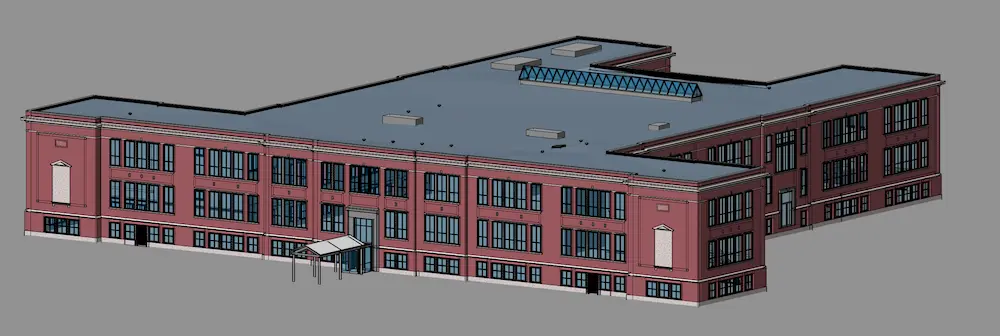
3D Laser Scanning Services in New York

As an architecture, engineering, or construction professional, you understand that projects require a tremendous amount of planning and coordination. GPRS 3D Laser Scanning can deliver accurate as-builts, point clouds, 2D CAD drawings, 3D photogrammetry, and 3D BIM models to expedite project planning and reduce change orders, delays, and costs.

Whether you are a general contractor or facility manager planning renovations or modifications, or an architect or engineer who requires precise project data, GPRS provides accurate existing conditions documentation, reality capture, and scan-to-BIM services to bring your design and construction projects in on time, and on budget.

When you need accurate architectural, structural, and MEP system dimensions, locations, and layouts for design, prefabrication, clash detection, facility modifications, or asset management, call GPRS. 3D laser scanning minimizes shutdowns and disruptions, eliminates the need for site revisits, and provides accurate as-built data to reduce risk and increase project efficiency.
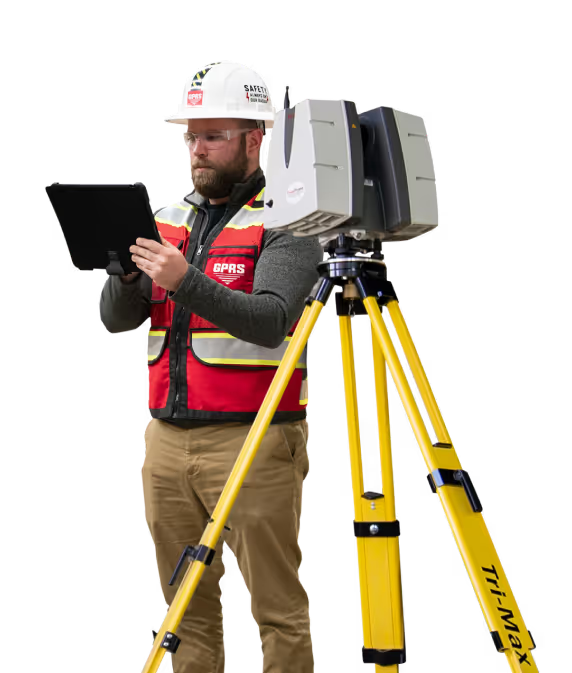
A man in a hard hat holding a tablet.

Request A Quote

I am the homeowner on a residential project
Format: 123-456-7890

Project Location

Project Information

To select multiple options, press CTRL

Project Notes *

File Attachments


New York City 3D Laser Scanning

646-558-5166laser@gprsinc.com

Rochester 3D Laser Scanning

585-333-9147laser@gprsinc.com

GPRS Project Managers

GPRS is the leading provider of 3D laser scanning services in New York. Our Project Managers document your site with the Leica ScanStation P-Series and the Leica RTC360 3D laser scanners, capturing up to 2 million data points per second with 2-4 millimeters accuracy. Each Project Manager completes the most extensive training program in the industry, with 80 hours of hands-on classroom training and 320 hours of mentorship in the field, plus another 40 hours of LiDAR training to deliver expertise in 3D laser scanning equipment and field knowledge.

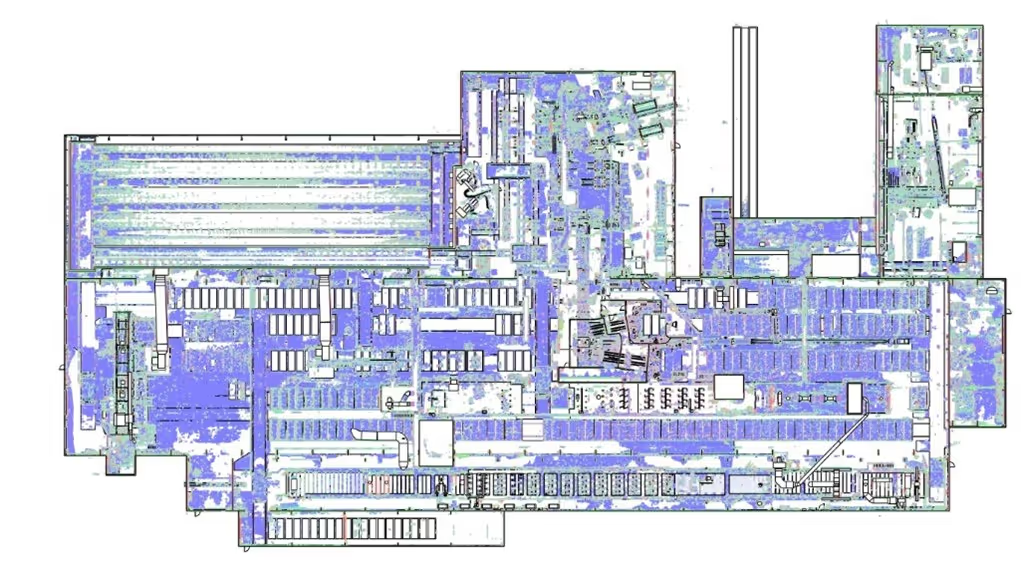
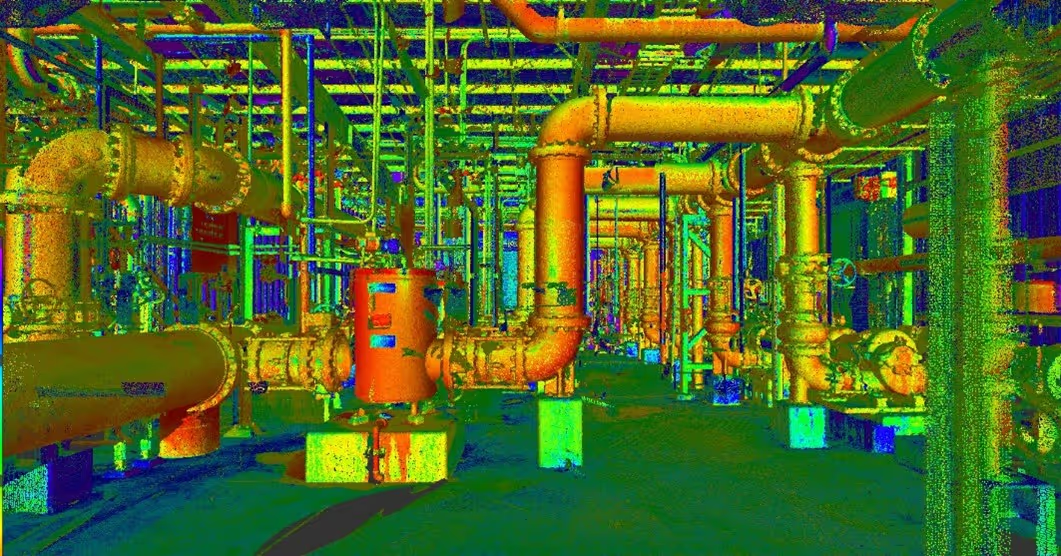
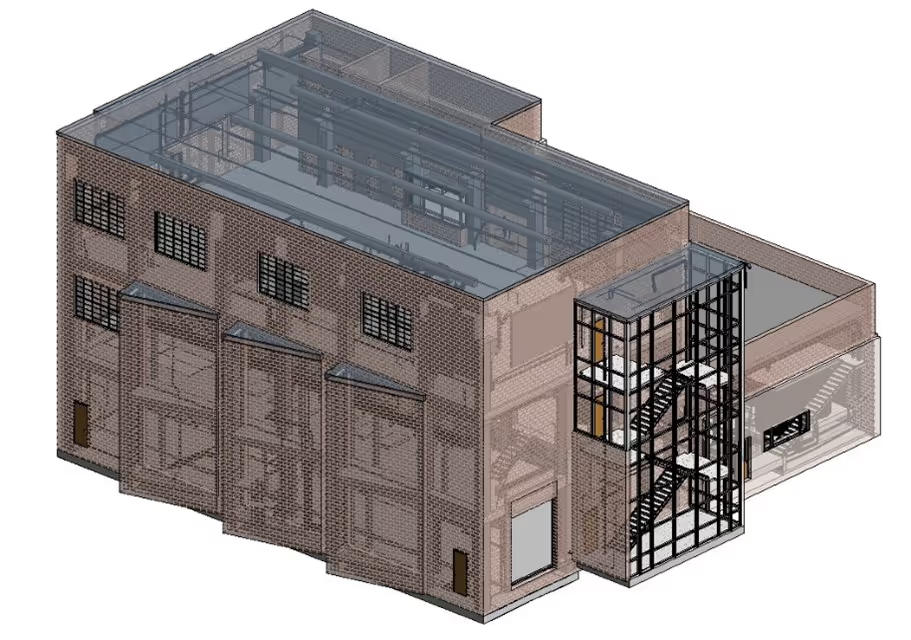
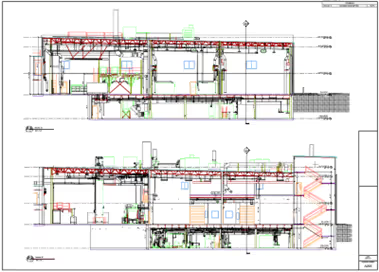
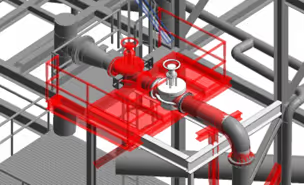
A 3D image of a factory with pipes and valves.A drawing of a road with a red line on it.A 3D drawing of a building with a staircase.

GPRS Mapping & Modeling Team

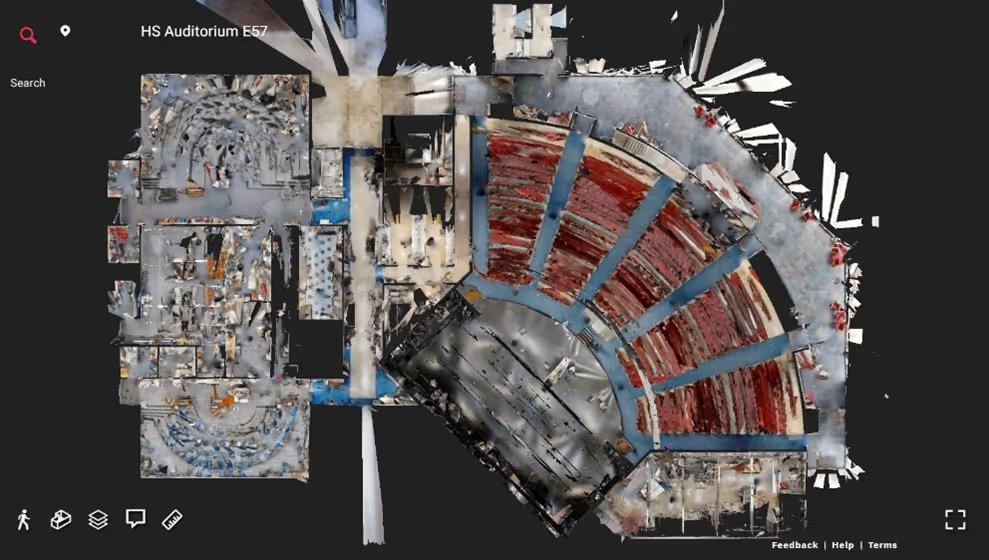
Construction drawings and models streamline planning, visualization, and coordination on your project because they provide a single source of truth for designers, architects, engineers, and contractors. GPRS’ in-house Mapping & Modeling Team can customize as-built data, 2D CAD drawings, 3D BIM models, 3D mesh models, virtual tours via WalkThru 3D, digital twins, floor plans via FLRPLN, and more to ensure you have all the information you need to get the job done right, delivered via GPRS’ SiteMap® digital storage software and app.

Maps and models can be produced at any level of detail in a variety of formats such as Revit, AutoCAD, ReCap, Navisworks, Civil 3D, BIM360, A360, Bentley, Leica Cyclone, Cintoo, and more. We have optimized workflows for importing data, registration, creating deliverables, quality checks, and transferring data to clients.

Not sure what you need? Not a problem. Our experienced Project Managers will work closely with you to define the project scope and use the right equipment and software to accurately map and model your project to accomplish your goals.

WHY CHOOSE US? 

THE GPRS DIFFERENCE.

With GPRS, clients can rest assured that our rigorously trained Project Managers use state-of-the-art technology to deliver the accurate as built information you need to do the job right. GPRS leads the industry to deliver precise as built information to enhance communication and collaboration among your project teams.

GPRS 3D Laser Scanning Services can bring these benefits to your project:

  • Collect up to two million data points per second with the highest-quality survey-grade laser scanners
  • Capture exact dimensions and measurements of your project site
  • Expedite planning and design with accurate as-builts
  • Eliminate site disruption and revisits
  • Receive precise point clouds, 2D drawings, and 3D models to improve collaboration and coordination
  • Tour the location, add digital notes, and even measure with a virtual tour
  • Reduce project risks, change orders, delays, accidents, and costs
GPRS main Logo: Intelligently Visualizing the built world | GPRS

GPRS 3D Laser Scanning Services in New York

A blue and white drawing of a building with a lot of wires.
As-Built Services
As-built services capture exact architectural, structural, and MEP system dimensions and layout of existing buildings, facilities, and sites, making them invaluable for design, construction, renovations, and modifications.
Learn More
A green and blue image of a factory with pipes and valves.
Point Clouds
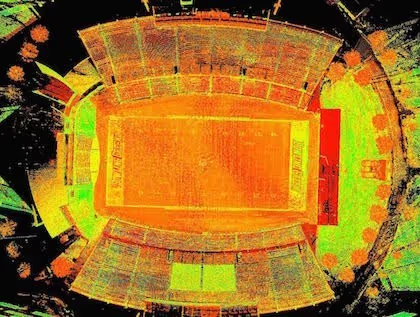
3D laser scanners record highly accurate digital measurements of sites and assets in the form of a point cloud and can be used to create 2D CAD drawings and 3D BIM models that improve project workflows, shorten turnaround times, and reduce costs.
Learn More
A 3D model of a building with a staircase.
3D BIM Modeling
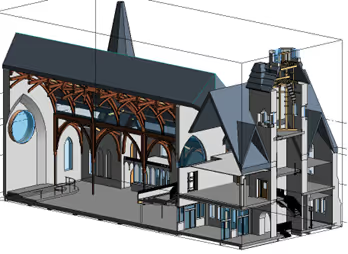
Intelligent 3D Building Information Models (BIM) provide contractors, engineers, architects, and facility managers an accurate digital twin of buildings and infrastructure to collaborate on design, construction, and operations.
Learn More
A picture of a building with a red circle in the middle.
3D Photogrammetry
3D rendered images can be used to create virtual tours, floorplans, topographic maps, point clouds, 3D models, and more for planning, analysis, and calculations.
Learn More
A drawing of a building with a red roof and a green roof.
2D CAD Drawings
GPRS can translate 3D laser scan data into 2D CAD drawings that provide your team with up-to-date floor plans, elevations, sections, details, isometric drawings, reflected ceiling plans, and more.
Learn More
A red pipe with a blue wire running through it.
Clash Detection
3D laser scanning captures as-built site conditions with 2-4 mm accuracy, helping to identify potential clashes, prefabricate components, and plan a flawless installation.
Learn More
A 3D drawing of a church with a steeple.
Design-Build
3D laser scanning provides accurate as-built site data to prevent expensive rework by identifying any mistakes early in the design through the construction phase.
Learn More
A stadium seating chart with a red line on the field.
Drone Imagery
GPRS offers rectified photogrammetry, aerial video and images, LiDAR scans, 2D orthomosaic images, CAD drawings, 3D models, and 3D fly throughs thanks to a wide-range of drone services operated by FAA Licensed pilots.
Learn More

We provide 3D Laser Scanning Services to these New York counties & many more:

  • Kings County
  • Queens County
  • New York County
  • Suffolk County
  • Nassau County
  • Bronx County
  • Westchester County
  • Erie County
  • Monroe County
  • Richmond County

Our portfolio of work includes projects in these New York cities & many more:

  • New York City, New York
  • Hampstead Town, New York
  • Brookhaven, New York
  • Islip, New York
  • Oyster Bay, New York
  • Buffalo, New York
  • North Hampstead, New York
  • Babylon Town, New York
  • Rochester City, New York
  • Yonkers, New York

Restoring Frank Lloyd Wright’s Unity Temple

Architects and mechanical contractors could plan both the demolition of the existing systems and the implementation of the new systems without jeopardizing the Frank Lloyd Wright Unity Temple's aesthetics and spatial design.
To laser scan both the interior and exterior of Frank Lloyd Wright’s Unity Temple and produce a 3D BIM model for historical renovation documentation.
GPRS laser scanned the interior and exterior of Frank Lloyd Wright’s Unity Temple to produce a 3D BIM model for historical renovation documentation.
Location: Unity Temple in Oak Park, Illinois Task: To laser scan both the interior and exterior of Frank Lloyd Wright’s Unity Temple and produce a 3D BIM model for historical renovation documentation. Challenge: The challenge in this case was to be able to thoroughly document the 1909 Frank Lloyd Wright masterpiece—in order to prepare for a multi-million dollar building restoration—without compromising the building’s historical identity or disrupting ongoing tourism and church activities within Unity Temple. Solutions: Building Information Modeling (BIM) has become a major practice within the AEC industry, specifically for new construction, adaptive reuse, or buildout projects. But how does this practice of “build twice” translate to restoring an early 19th century architectural marvel? By means of High Definition Surveying (HDS). HDS is a non-contact measuring tool that collects visible information of existing conditions in a fast, precise way while, at the same time, reducing damage risks and time associated with traditional measuring methods. Visible information is captured in 360 degrees, generating a 3D point cloud with accuracy up to 2 to 4mm. These point clouds ultimately become 3D virtual worlds of the building, making the method a fast and cost effective way to generate as-built documentation (both 2D and 3D) for project analysis and coordination. In the case of Unity Temple, TruePoint was hired for its expertise in historical preservation by means of laser scanning and BIM modeling. TruePoint’s team of architects and engineers performed a comprehensive laser scan of the building’s interior (temple, offices, mechanical basement, classrooms, etc.), exterior, roof, and skylights in order to capture explicit detail of Unity Temple’s current condition. TruePoint then created a 3D Revit model from the point cloud data so that the construction management firm and subcontractors (mechanical contractors, concrete restoration, architects, etc.) could investigate the building’s existing state and accurately assess their project designs for restoring Unity Temple. Deliverables: Deliverables included a 3D Revit model of the building’s interior, exterior, roof, and skylights; a colorized point cloud in Autodesk Recap file formats (.rcp/.rcs) to be used directly in Autodesk Software (Revit, AutoCAD, Navisworks, etc.); and TruView photographs. Added Value: The colorized point cloud generated from laser scanning gave explicit detailed information that would be otherwise nearly impossible or extremely difficult to document without risking damage to the fragile building elements. Examples of two key architectural features are the intricate window panes (e.g., clerestories, skylights) and the wood trim throughout Unity Temple. Both of these features were collected in the point cloud data in congruence with other building information (structure, mechanical systems, etc.). Additionally, TruePoint trained the client on how to create 2D elevations, sections, and a Reflected Ceiling Plan (RCP) directly from the point cloud data within AutoCAD. These AutoCAD sheets contained precise measurements and photographs, making it quick and easy for the client to identify the exact piece and location of each element for its removal, restoration, and re-implementation. TruePoint also provided the client with TruViews. The TruView utilizes a free plug-in for Internet Explorer in order to view each scan location from the scanner’s perspective. This offers a quick, easy way to take rudimentary measurements, make hyperlink notes, and perform project collaboration, thereby reducing the hassle, time, and cost associated with on-site visits. Another added bonus of producing a comprehensive point cloud and BIM model of Unity Temple was documenting the existing mechanical room and tunnel in relation to the entire structure. Mechanical contractors and architects could then plan both demolition of the existing systems and implementation of the new systems without jeopardizing Frank Lloyd Wright’s aesthetic and spatial design.
All
3D Laser Scanning
3D Laser Scanning
Mapping & Modeling

3D Laser Scan Corporate Office HVAC and Mechanical Systems

With 3D laser scan data, the client can accurately verify the existing HVAC and mechanical equipment within the building without having to worry about positioning or measurement error. This helps them to design their new systems more accurately and efficiently.‍
3D scanning services were performed for a 10-story office building, capturing existing above-ceiling interstitial HVAC systems on each floor, as well as mechanical rooms, chiller rooms, air handling unit rooms and a basement tunnel connecting the utility area to the office building. Over 240,000 square foot of space was laser scanned to document the as-is conditions. The client was upgrading the HVAC system and GPRS developed a 3D model to aid the design process and reduce clashes.
With the 3D laser scan data collected by GPRS, the client could accurately verify the existing HVAC and mechanical equipment within the building.
Location: Toledo, Ohio Task: 3D scanning services were performed for a 10-story office building, capturing existing above-ceiling interstitial HVAC systems on each floor, as well as mechanical rooms, chiller rooms, air handling unit rooms and a basement tunnel connecting the utility area to the office building. Over 240,000 square foot of space was laser scanned to document the as-is conditions. The client was upgrading the HVAC system and GPRS developed a 3D model to aid the design process and reduce clashes. Challenge: With the site being an active office building, it was critical that the required lidar scanning data was obtained with minimal interruptions. Accuracy was important and the space was vast, they needed complete documentation to plan for system upgrades, including above the acoustic tile that was to remain in place. Solutions: Using the RTC360 and P40 Leica 3D laser scanners, GPRS Project Managers 3D laser scanned the interstitial and mechanical space in the evenings to avoid interrupting the office workday. A laser scanner mounted to a tripod was extended above the ceiling tiles to capture the interstitial space. With the 3D laser scan data, the client can accurately verify the existing HVAC and mechanical equipment within the building without having to worry about positioning or measurement error. This enables them to design their new systems more accurately and efficiently. Deliverable: GPRS delivered point cloud data in .rcs file format usable in Autodesk products (Revit, AutoCAD, Navisworks, etc.) so the client can align and overlay the point cloud to their existing 3D Revit model to verify the location of large format ductwork located in the interstitial space. GPRS also provided a 3D model of the mechanical rooms, chiller rooms, air handling unit rooms and basement tunnel. An LOD 100 model of the structural space and an LOD 300 of the MEP space was delivered to the client. Added Value: GPRS customizes deliverables for each client, so they are only paying for what they need. Also, upon completion of the HVAC system upgrade and prior to ceiling tiles being installed, GPRS will re-mobilize to the site to capture the new as-built conditions of the space for future reference.
All
3D Laser Scanning
3D Laser Scanning
Mapping & Modeling

GPRS 3D Laser Scans Hard Rock Stadium For Mixed Reality Super Bowl Feature

3D laser scanning captures real-world spaces with millimeter precision for clients to create engaging virtual reality experiences.
GPRS 3D laser scanned the Hard Rock Stadium for use in a mixed-reality experience during the 2020 Super Bowl on February 2. Mixed reality is a blend of physical and virtual worlds that includes both real and computer-generated objects. The two worlds are "mixed" together to create a realistic environment.
Case Study: TruePoint 3D Laser Scans Hard Rock Stadium For Mixed Reality Super Bowl Feature We would like to thank The Famous Group, the Miami Dolphins and the Hard Rock Stadium for allowing us to be a part of this project.” - Ryan Hacker, President of TruePoint Laser Scanning Location: Hard Rock Stadium, Miami, Florida Task: TruePoint 3D laser scanned the Hard Rock Stadium for use in a mixed-reality experience during the 2020 Super Bowl on February 2. Mixed reality is a blend of physical and virtual worlds that includes both real and computer-generated objects. The two worlds are "mixed" together to create a realistic environment. Challenge: It was important to the client that the existing spatial layout was captured with great accuracy. When generating the mixed reality experience, computer-generated objects must precisely interact with the physical environment to sell the realism. Solution: The upper and lower stands, field topography, LED display screens, LED ribbon around stadium, two Hard Rock Stadium signs and roof structure were documented with a survey-grade Leica P40 ScanStation. In two days onsite, 172 laser scans of precise point cloud data was captured. TruePoint’s team of in-house engineers quickly generated a 3D Revit model for the client. The client planned to use Autodesk Maya, a 3D computer animation, modeling and rendering software to create an augmented reality (AR) simulation. Deliverables: TruePoint delivered point cloud files in .rcs format, a 3D Revit Model, and a FBX file. The client was also able to view the model progress using Autodesk A360, a web-browser application that allows engineers and project teams to work together more easily in an online workspace. Added Value: “Everything we do at TruePoint Laser Scanning is highly custom. This client wanted portions of the stadium modeled in LOD 100 and portions modeled in LOD 300. Our deliverables were customized, so the client is only paying for what they need,” Aaron Hunt, Lead Technical Manager. For information on 3D laser scanning for mixed reality applications, contact TruePoint 3D Laser Scanning at 419-843-7226 or info@truepointscanning.com. Watch the NFL 100 ceremony prior to Super Bowl LIV featuring this six-minute video of mixed-reality graphics executed by Fox Sports and The Famous Group. hard-rock-stadium-3d-laser-scanning-5.JPG The upper and lower stands, field topography, LED display screens, LED ribbon around stadium, two Hard Rock Stadium signs and roof structure were documented with a survey-grade Leica P40 ScanStation. hard-rock-stadium-3d-laser-scanning-1.png TruePoint quickly generated a 3D Revit model of the stadium for use in Autodesk Maya, a computer animation software. hard-rock-stadium-3d-laser-scanning-2.png The client requested a custom Revit model, portions were modeled in LOD 100 and portions in LOD 300. hard-rock-stadium-3d-laser-scanning-3.jpg The client was able to view the model progress using Autodesk A360, a web-browser application that allows project teams to work together in an online workspace.
All
3D Laser Scanning
3D Laser Scanning
Mapping & Modeling

GPRS
INTELLIGENTLY VISUALIZING THE BUILT WORLD®